 256b8347e7
This is a fix to pnpm deployment which needs testing as the final part of origin/master release No functional changes * fix(docs): remove stray tool-call tags breaking the MDX build platform/docs/docs/migration-guide/3p12-to-3p13/build-tooling.md ended with two orphan closing tags (leftover tool-call serialization artifacts): </content> </invoke> Docusaurus compiles Markdown as MDX (JSX-aware), so the orphan closing tag failed the docs build: MDX compilation failed ... Unexpected closing slash in tag, expected an open tag first (build-tooling.md line 402) This was the remaining blocker for build-and-deploy-docs once the --no-frozen-lockfile change let the install step succeed. A scan of the docs tree found no other such artifacts. Verified locally: docusaurus build now generates static files with no MDX errors. Co-Authored-By: Claude Opus 4.8 (1M context) <noreply@anthropic.com> * Update lockfile and avoid freshness check on every command * fix(release): keep workspace:* in the repo, concretize only at publish The release flow rewrote internal @ohif/* dependency specifiers to the concrete version and committed them, so pnpm-lock.yaml (which records workspace links) drifted from the manifests on every version bump. The resulting ERR_PNPM_OUTDATED_LOCKFILE broke every frozen install: Netlify (viewer-dev), the docs deploy, pnpm's pre-run deps check, and post-merge installs. Keep workspace:* everywhere in the committed repo and move the concrete-version substitution to publish time only: - publish-version.mjs: bump each package's own `version` field only; stop rewriting @ohif/* dependency/peerDependency specifiers. - publish-package.mjs: publish with `pnpm publish --no-git-checks` instead of `npm publish`. pnpm rewrites workspace:* to the exact version in the published tarball; npm would publish the literal "workspace:*", which npm/yarn consumers cannot resolve. - One-time: revert the 25 workspace manifests' @ohif/* specifiers to workspace:* (version fields untouched) and regenerate pnpm-lock.yaml to match. Because internal deps are workspace:* (links, not versions in the lockfile), version bumps no longer change pnpm-lock.yaml, so it stays in sync and frozen installs keep working. Verified: `pnpm install --frozen-lockfile` passes, and `pnpm pack` of @ohif/core emits a tarball whose @ohif/ui dependency is the exact version (3.13.0-beta.92), not workspace:*. Co-Authored-By: Claude Opus 4.8 (1M context) <noreply@anthropic.com> * docs(ci): correct build-docs install comment for workspace:* release flow publish-version.mjs no longer rewrites @ohif/* deps to concrete versions, so the old comment was stale. Internal deps stay workspace:* and the lockfile stays consistent; pnpm publish concretizes only the published tarball. Co-Authored-By: Claude Opus 4.8 (1M context) <noreply@anthropic.com> * ci(docs): use --frozen-lockfile now that the lockfile no longer drifts With internal deps as workspace:* the lockfile stays in sync across version bumps, so the docs deploy can install frozen -- failing fast on genuine lockfile drift instead of silently reconciling. The --no-frozen-lockfile workaround is no longer needed. Co-Authored-By: Claude Opus 4.8 (1M context) <noreply@anthropic.com> * ci: use --frozen-lockfile in CI install steps now that the lockfile is stable Internal @ohif/* deps are workspace:* so pnpm-lock.yaml no longer drifts; the UNIT_TESTS/BUILD/NPM_PUBLISH installs can run frozen and fail fast on genuine drift. Kept --no-frozen-lockfile only where it is still required: the Dockerfile (platform/docs is excluded from the build context) and the playwright CS3D-version step (mutates @cornerstonejs versions before installing). Co-Authored-By: Claude Opus 4.8 (1M context) <noreply@anthropic.com> * test: stability of seg load mpr test * Better drag fix for crosshairs --------- Co-authored-by: Claude Opus 4.8 (1M context) <noreply@anthropic.com> |
||
|---|---|---|
| .. | ||
| assets | ||
| configuration | ||
| deployment | ||
| development | ||
| faq | ||
| migration-guide | ||
| platform | ||
| user-guide | ||
| conformance.md | ||
| README.md | ||
| release-notes.md | ||
| resources.md | ||
| test-coverage.md | ||
| id | slug | sidebar_position |
|---|---|---|
| Introduction | / | 1 |
The Open Health Imaging Foundation (OHIF) Viewer is an open source, web-based, medical imaging platform. It aims to provide a core framework for building complex imaging applications.
Key features:
- Designed to load large radiology studies as quickly as possible. Retrieves metadata ahead of time and streams in imaging pixel data as needed.
- Leverages Cornerstone3D for decoding, rendering, and annotating medical images.
- Works out-of-the-box with Image Archives that support DICOMWeb. Offers a Data Source API for communicating with archives over proprietary API formats.
- Provides a plugin framework for creating task-based workflow modes which can reuse core functionality.
- Beautiful user interface (UI) designed with extensibility in mind. UI components available in a reusable component library built with React.js and Tailwind CSS
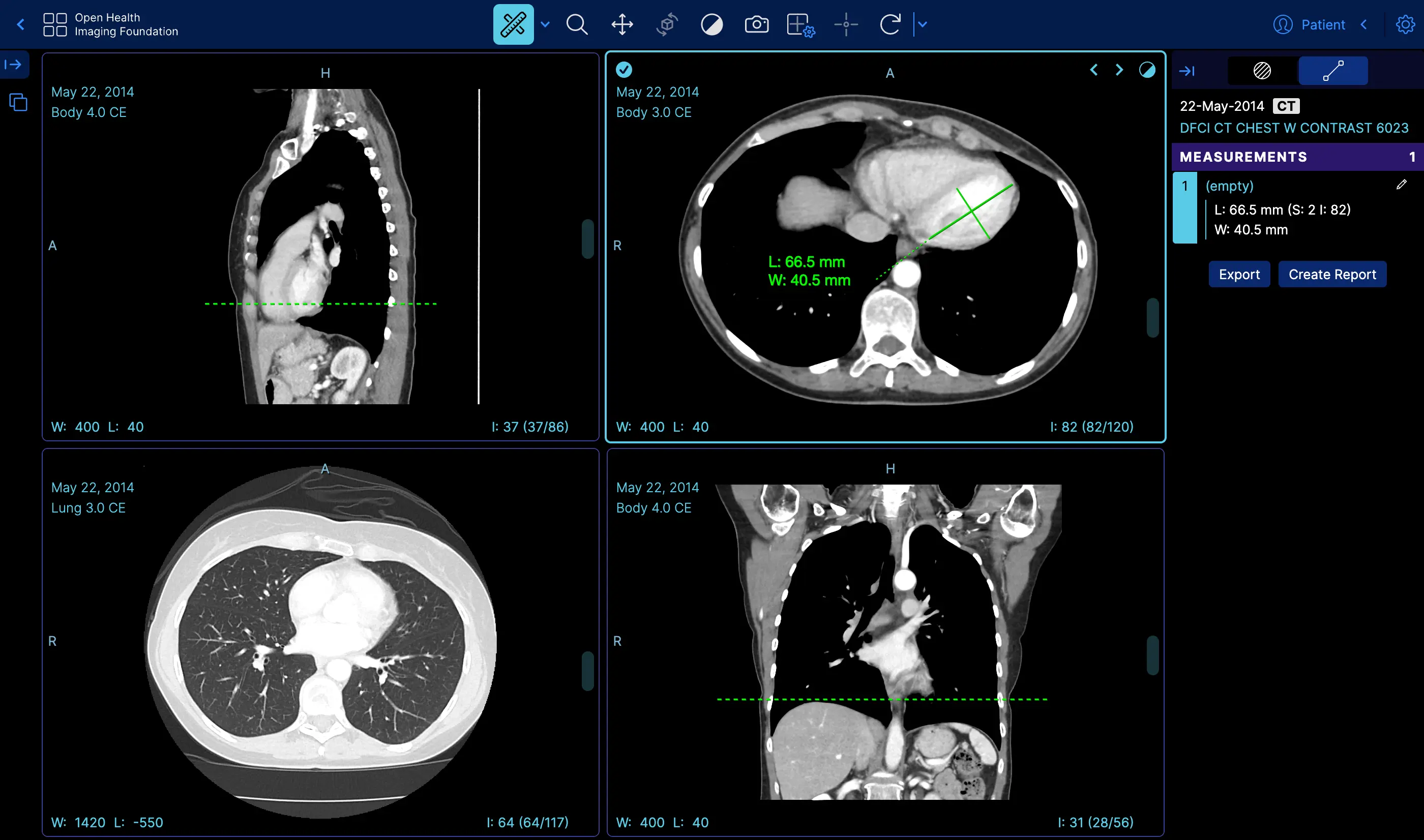 |
Measurement Tracking | Demo |
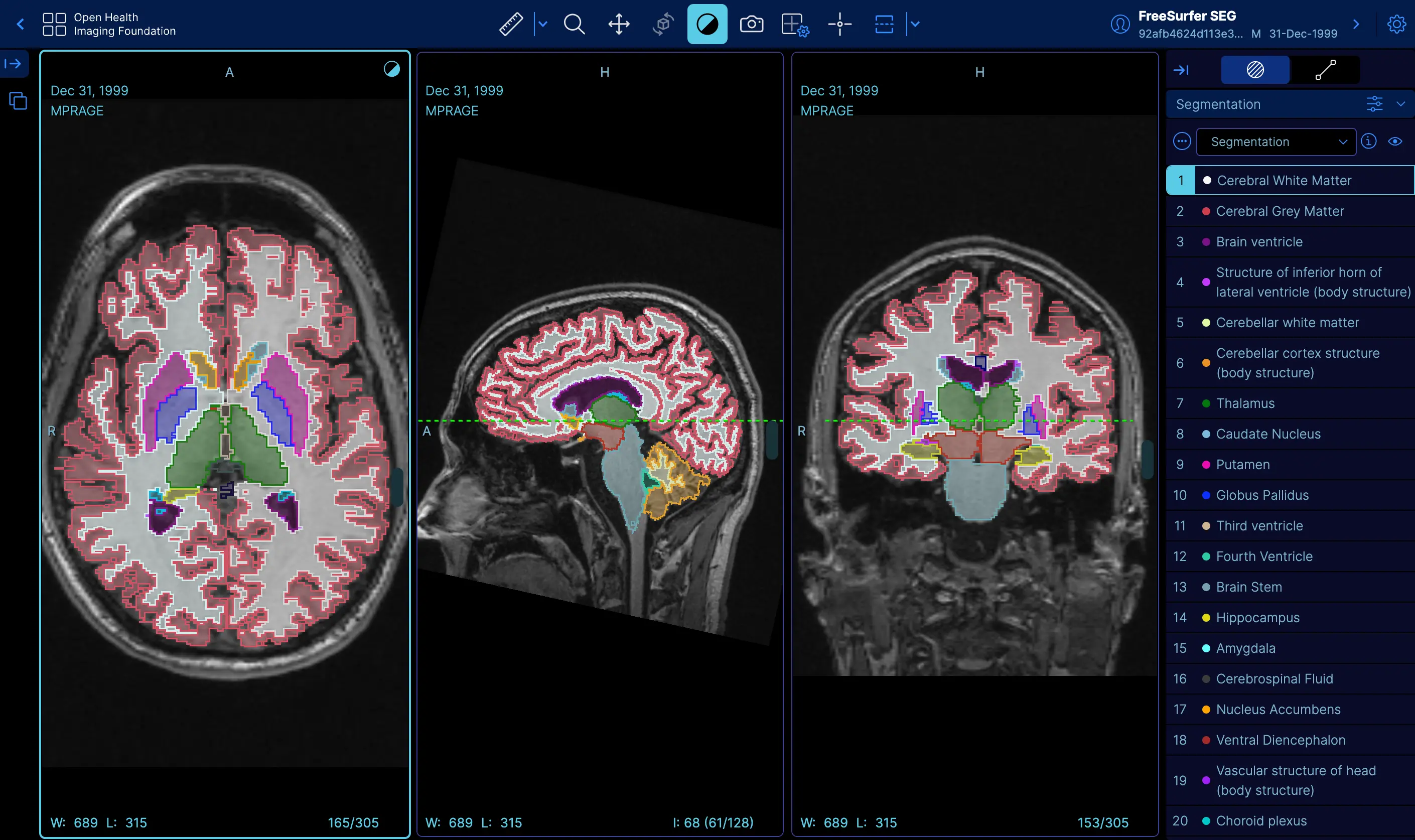 |
Labelmap Segmentations | Demo |
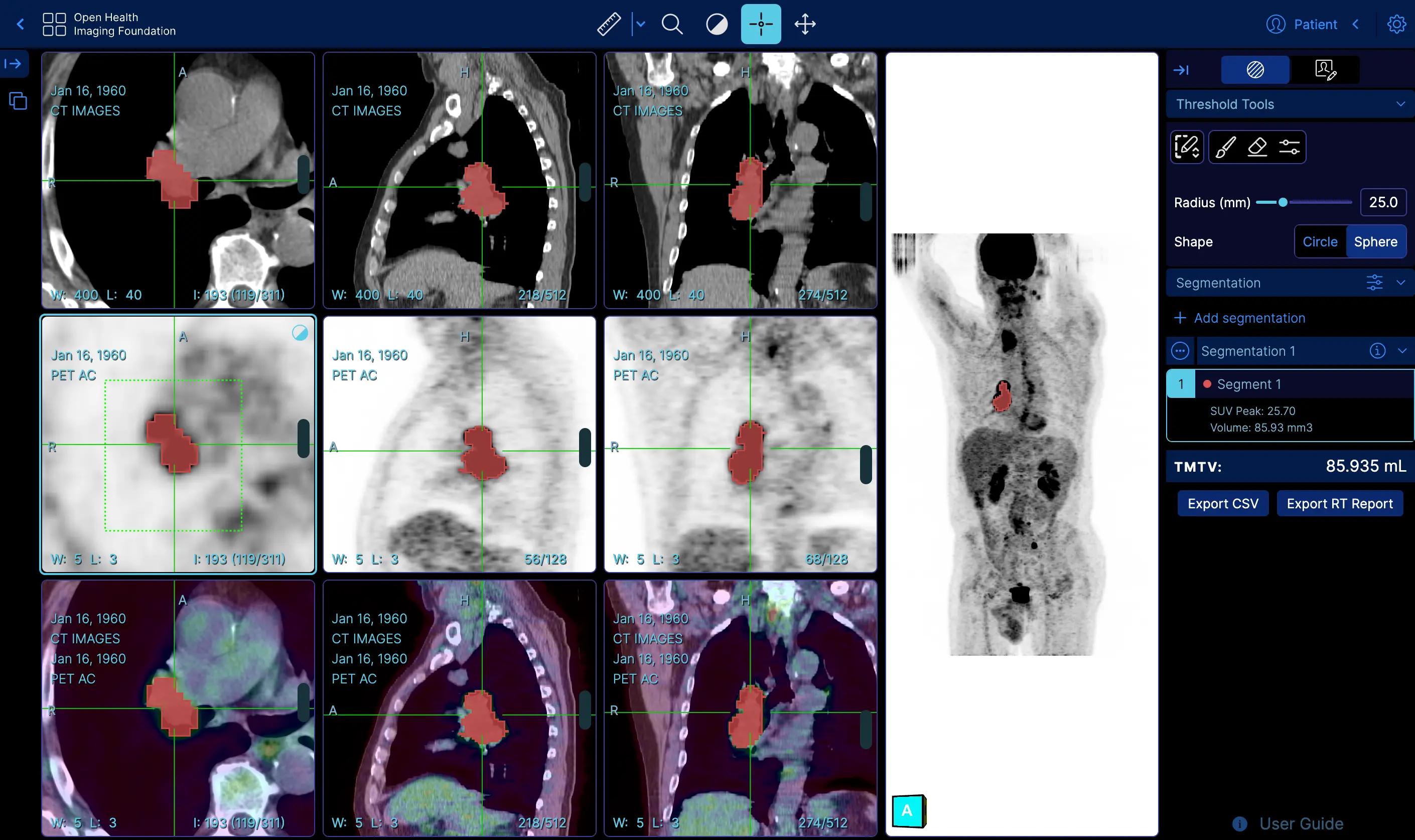 |
Fusion and Custom Hanging protocols | Demo |
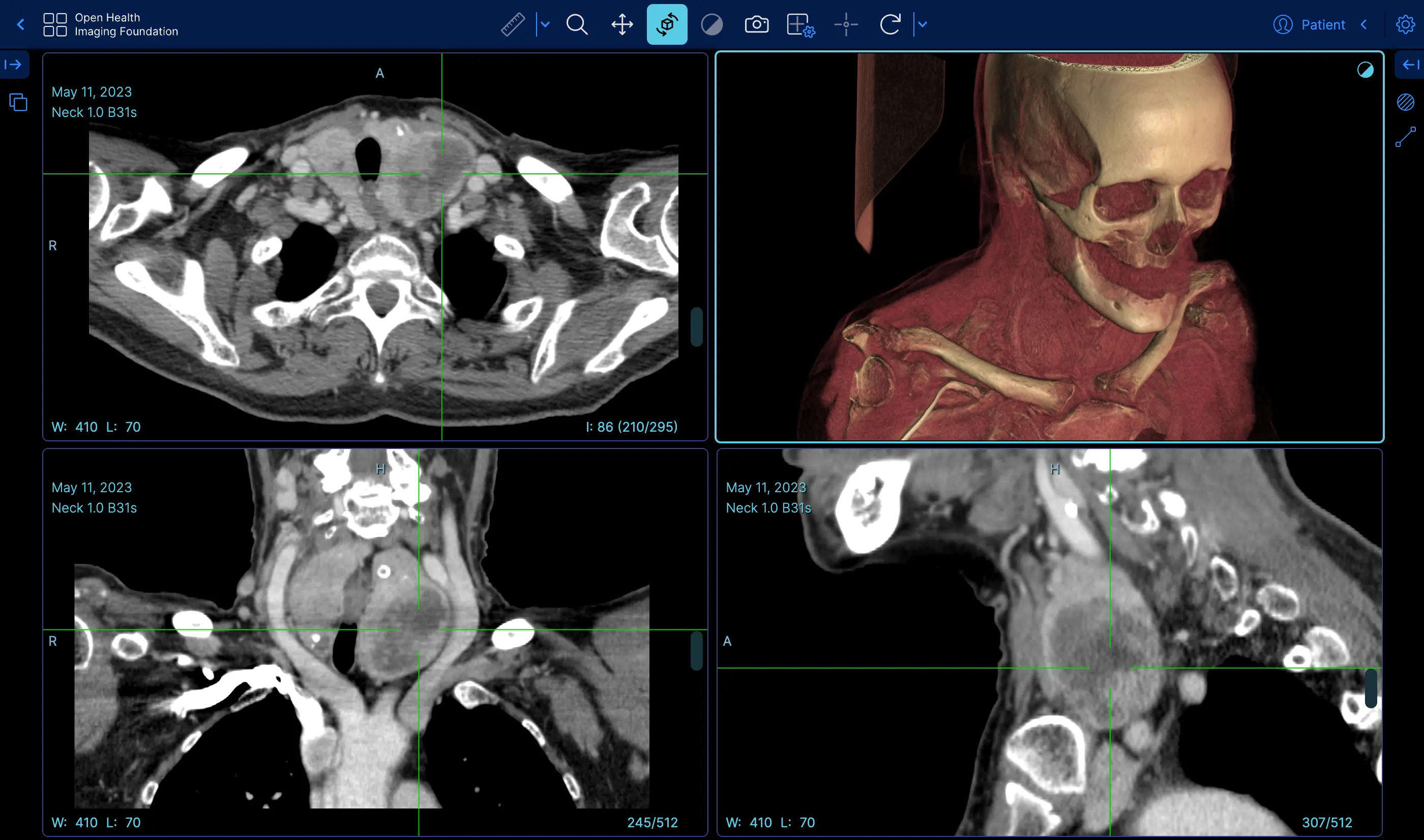 |
Volume Rendering | Demo |
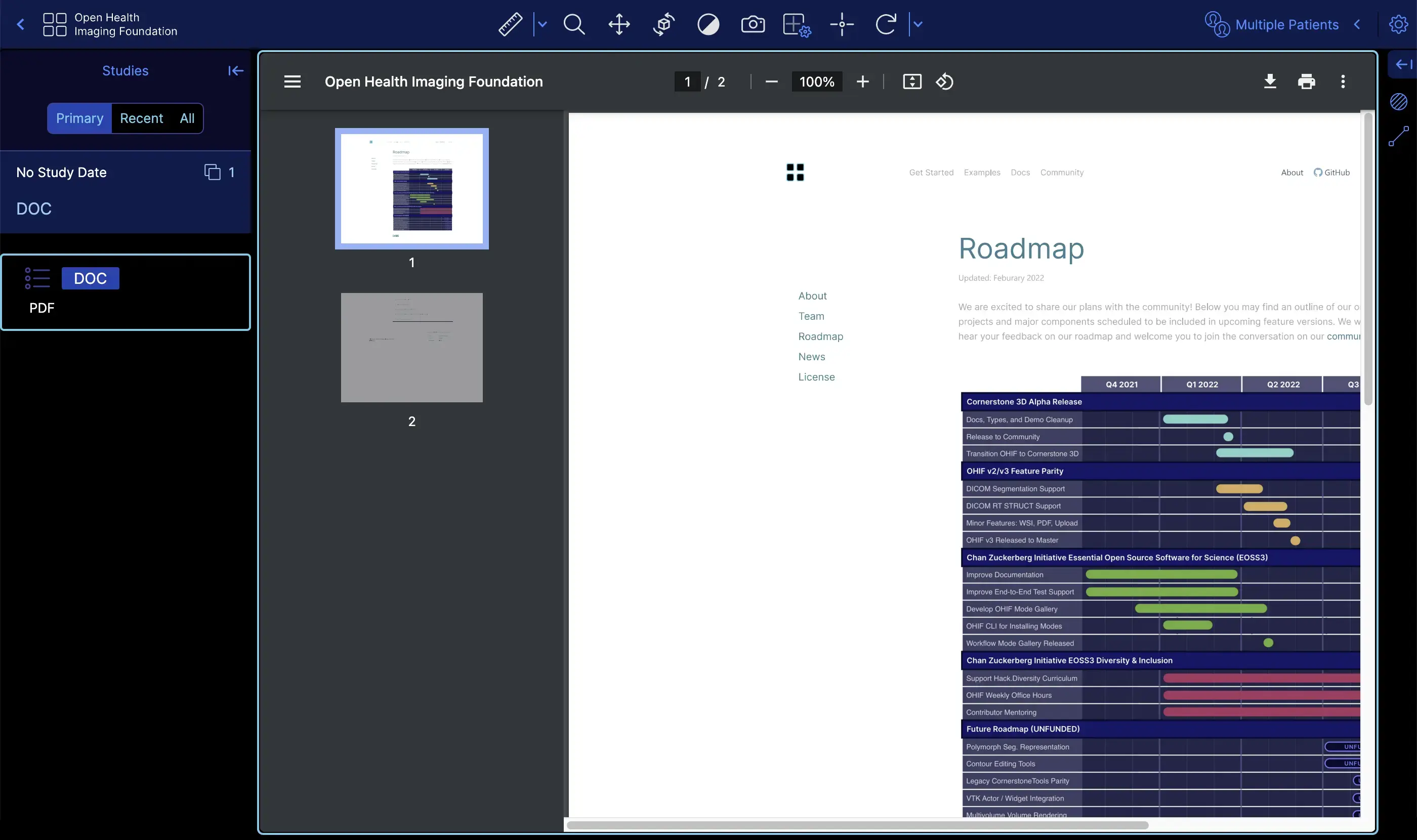 |
Demo | |
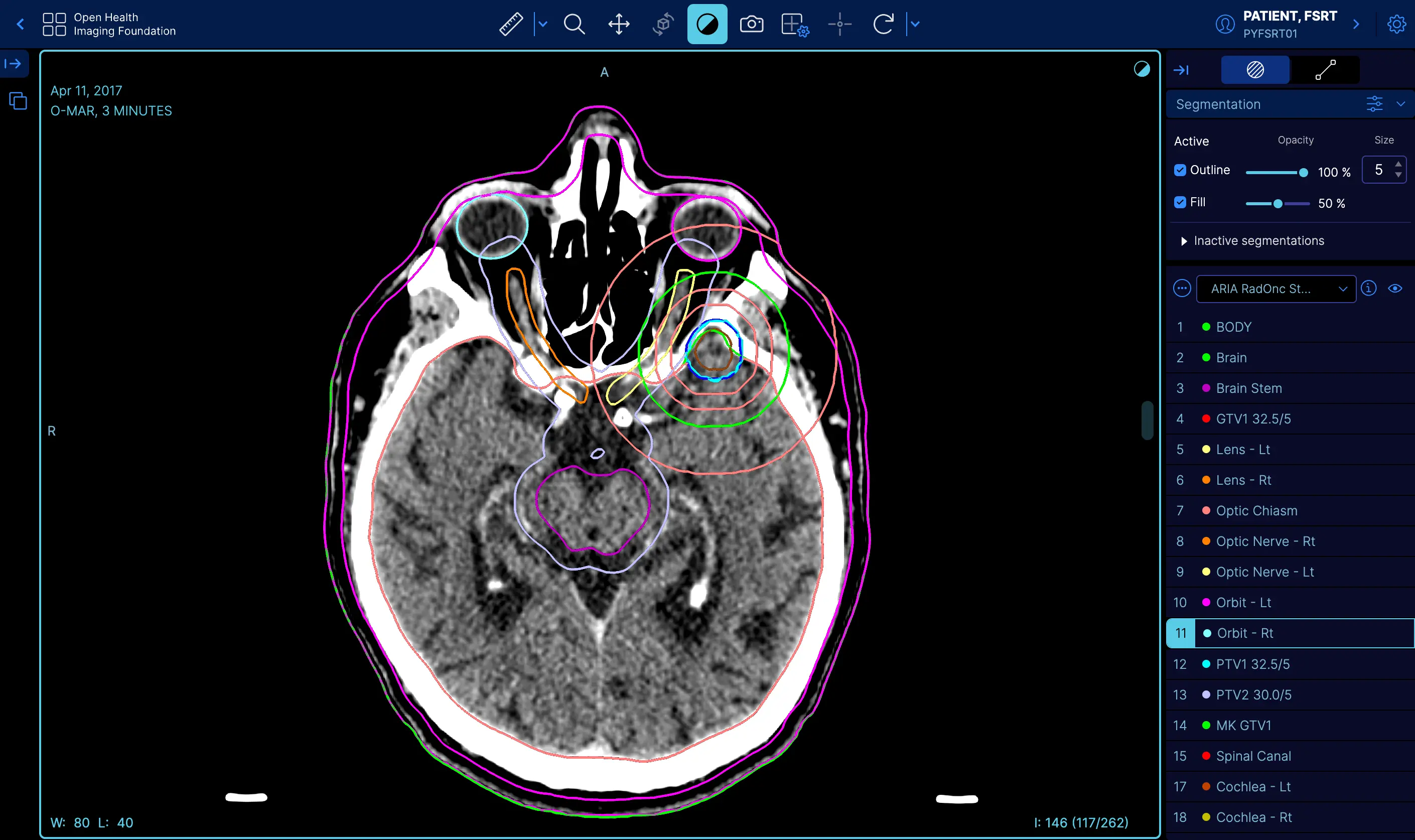 |
RT STRUCT | Demo |
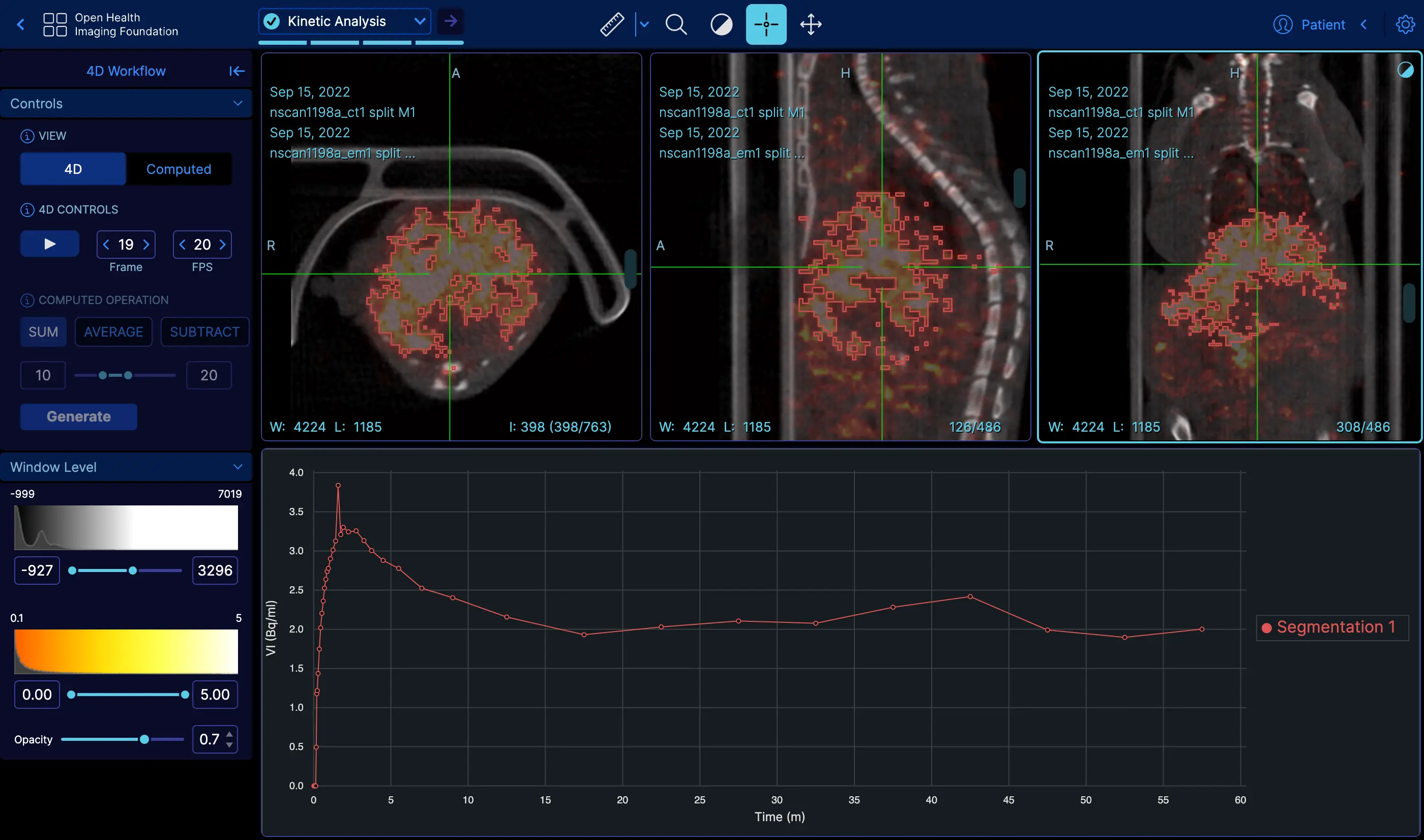 |
4D | Demo |
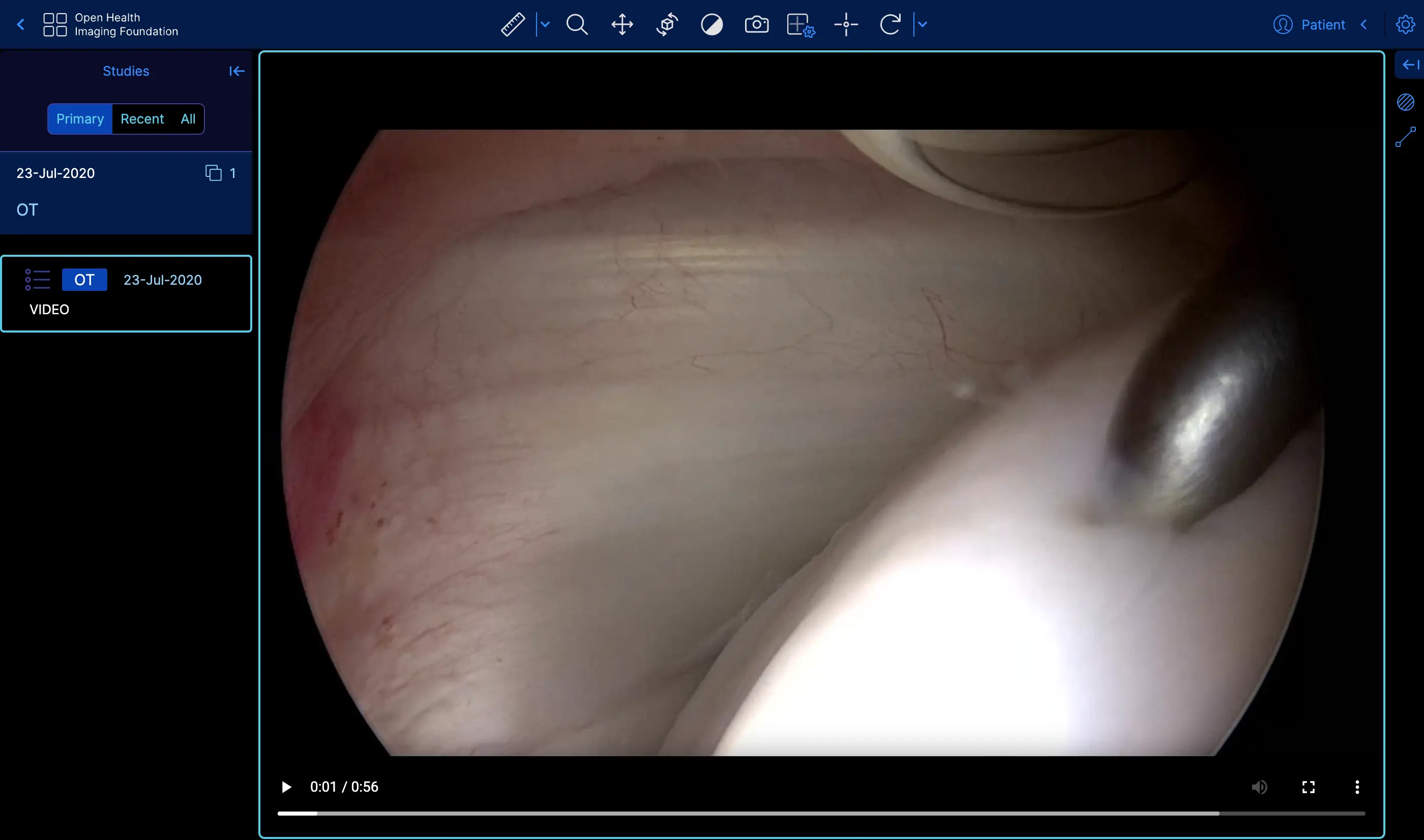 |
Video | Demo |
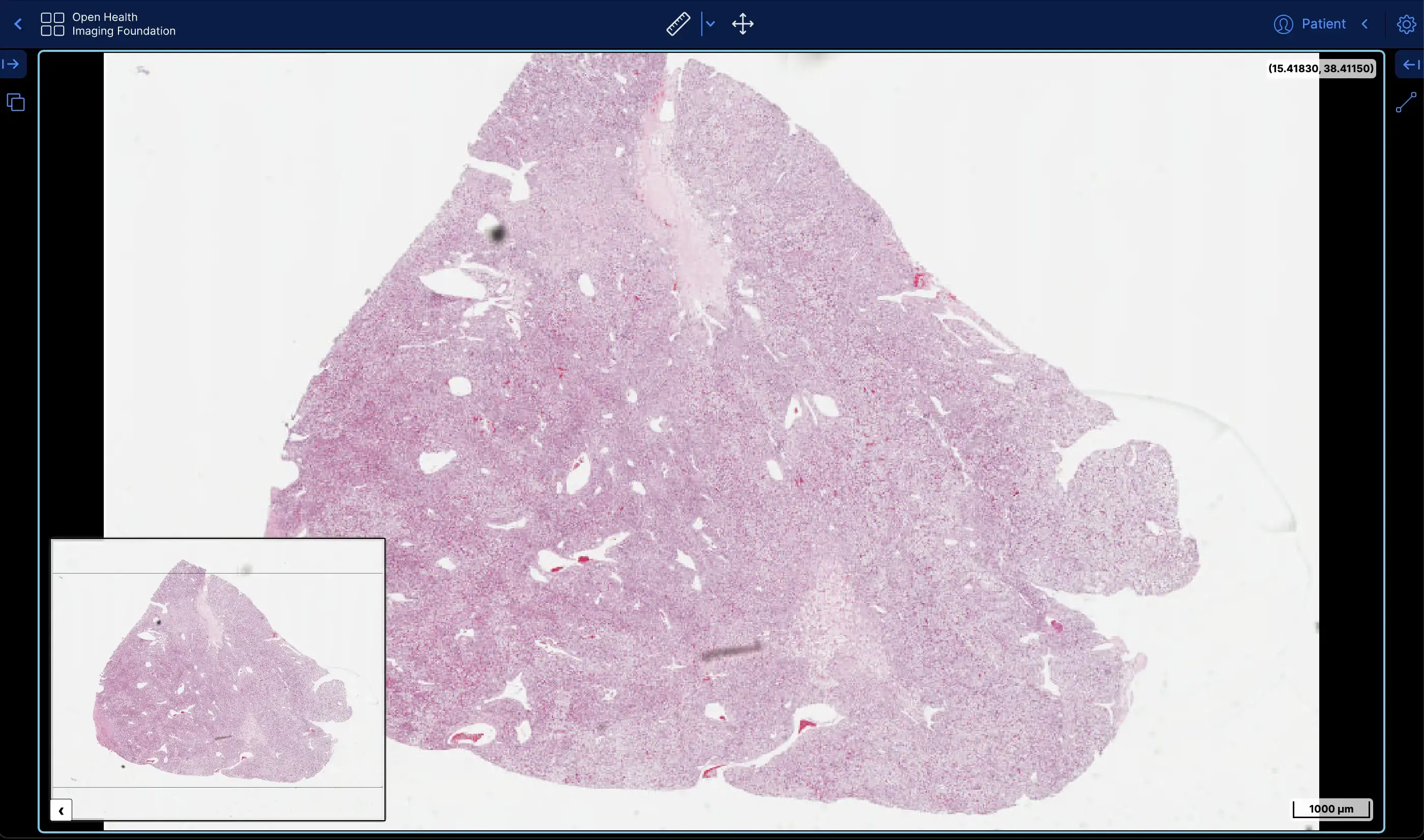 |
Slide Microscopy | Demo |
Where to next?
The Open Health Imaging Foundation intends to provide an imaging viewer framework which can be easily extended for specific uses. If you find yourself unable to extend the viewer for your purposes, please reach out via our GitHub issues. We are actively seeking feedback on ways to improve our integration and extension points.
Check out these helpful links:
- Ready to dive into some code? Check out our Getting Started Guide.
- We're an active, vibrant community. Learn how you can be more involved.
- Feeling lost? Read our help page.
Citing OHIF
To cite the OHIF Viewer in an academic publication, please cite
Open Health Imaging Foundation Viewer: An Extensible Open-Source Framework for Building Web-Based Imaging Applications to Support Cancer Research
Erik Ziegler, Trinity Urban, Danny Brown, James Petts, Steve D. Pieper, Rob Lewis, Chris Hafey, and Gordon J. Harris JCO Clinical Cancer Informatics, no. 4 (2020), 336-345, DOI: 10.1200/CCI.19.00131
This article is freely available on Pubmed Central: https://www.ncbi.nlm.nih.gov/pmc/articles/PMC7259879/
or, for Lesion Tracker of OHIF v1, please cite:
LesionTracker: Extensible Open-Source Zero-Footprint Web Viewer for Cancer Imaging Research and Clinical Trials
Trinity Urban, Erik Ziegler, Rob Lewis, Chris Hafey, Cheryl Sadow, Annick D. Van den Abbeele and Gordon J. Harris Cancer Research, November 1 2017 (77) (21) e119-e122 DOI: 10.1158/0008-5472.CAN-17-0334
This article is freely available on Pubmed Central. https://pubmed.ncbi.nlm.nih.gov/29092955/
Note: If you use or find this repository helpful, please take the time to star this repository on Github. This is an easy way for us to assess adoption, and it can help us obtain future funding for the project.
License
MIT © OHIF